


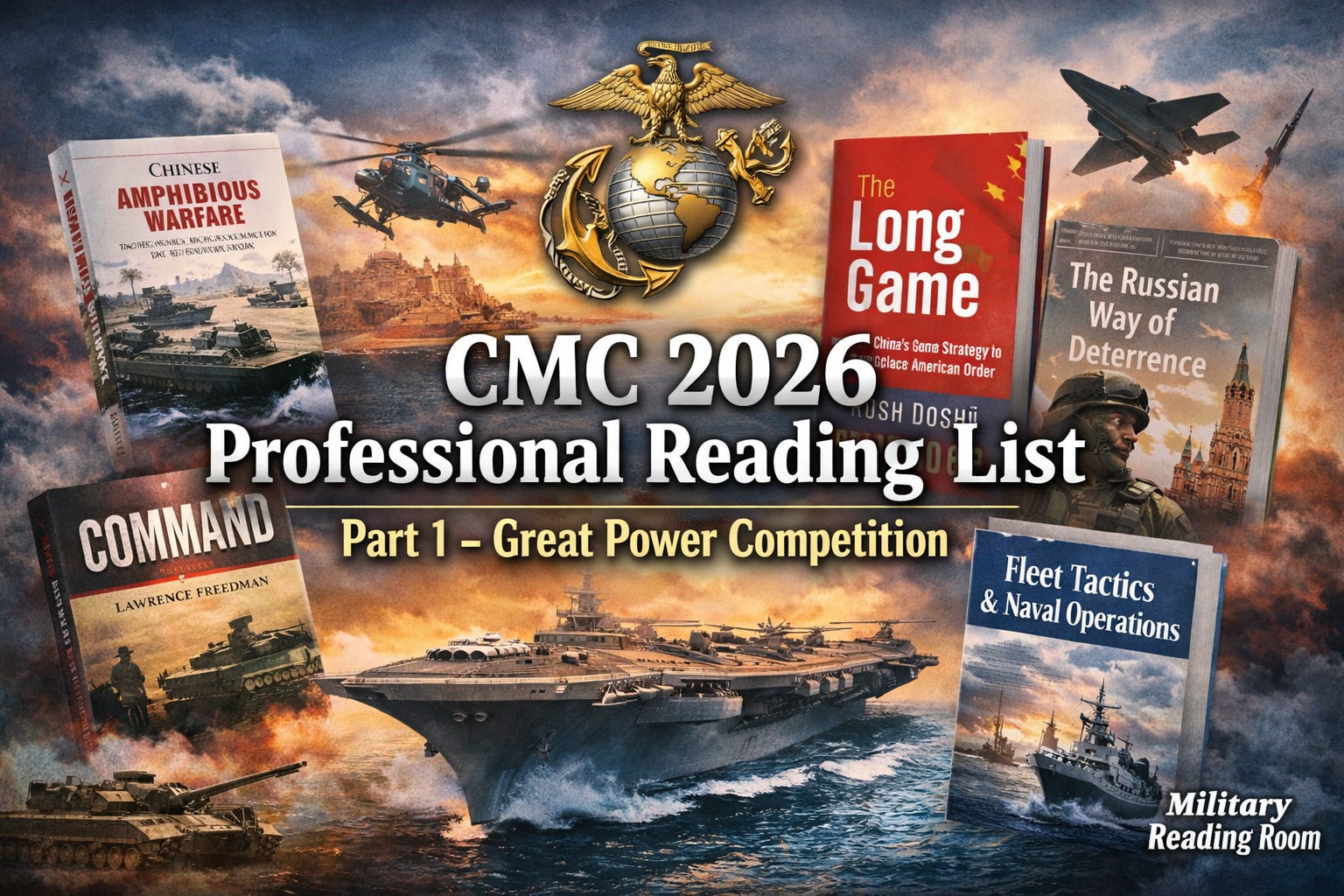
I was excited when I saw the ALMAR (All Marines) message hit the street in December. Over the past ten years, the various service reading lists have been hit-or-miss. This year, however, both the Commandant and the Chief of Naval Operations raised the bar.
For the last 40 years, the multiple versions of the Commandant’s reading list have been both my friend and tormentor. Friend, as in I always had a list of something to read next. Tormentor, as in I always had a list of something to read next.
Most of us have different interests in military history and strategy. Some are focused primarily on land warfare, while others are drawn more to naval warfare or aviation. The reading lists we promote on MRR help guide those decisions, especially when we are looking for the next worthwhile book in the military genre.
The Commandant’s Professional Reading Program remains one of the Marine Corps’ clearest statements that warfighting excellence depends on intellectual seriousness as much as physical toughness.
For Fiscal Year 2026, the Commandant’s Professional Reading List is organized into six sections—Commandant’s Choice, Heritage, Innovation, Leadership, Strategy, and Foundational—offering Marines a broad framework for professional growth while reinforcing the Corps’ character, judgment, and warfighting ethos.
This year’s update, issued as the Marine Corps celebrates its 250th anniversary year, is designed both to honor the institution’s past and to prepare Marines for the demands of the future fight.
In this series, we will work through the reading list section by section. We decided to begin with the Strategy section—specifically Great Power Competition—because it seemed the most relevant place to start for Military Reading Room subscribers, given the rapidly changing global environment.
Here, the reading list turns squarely toward the strategic problem set shaping the current era: long-term rivalry with major powers, the political character of command, maritime conflict, deterrence, and the challenge of understanding adversaries on their own terms.
Together, the books in this opening group frame competition not as an abstract policy debate, but as a practical military problem that demands historical awareness, strategic literacy, and professional reflection.
